Really quite into this. Keep on commentin' on...
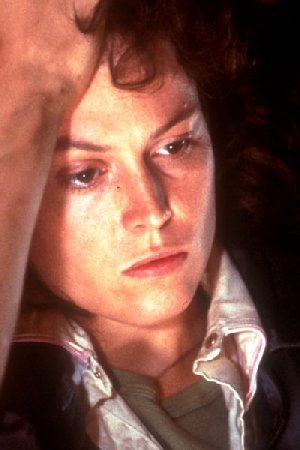 Veneration of all things Sigourney Weaver, probably my favourite American actress of the 1980s and 1990s, began on a first VHS viewing of Alien, was cemented by a follow-up experience of Aliens and then another and another, remained undiminished for every second of the criminally underrated Ghostbusters II (OK, I was 12), and had me looking forward to Alien³ as if Renée Maria Falconetti were returning to the role of Joan of Arc and intended to kick some serious ecclesiastical ass this time. Throughout that curious dirge of a sequel I found Weaver as riveting a presence as ever, so much more fearsome running down those prison corridors, somehow, than the alien itself, and so much more determined to claim the franchise as her own, to kill it off, even to resurrect it, six years later, on her own indomitable and fiery terms.
  Five of the best:
 2. Aliens (1986)
 3. Gorillas in the Mist (1988)
 4. Alien: Resurrection (1997)
 5. The Ice Storm (1997)
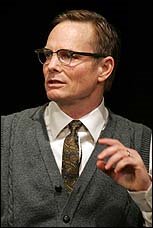 I haven't yet blogged about my favourite performance on the West End stage in the past year or so, and, as I walked past the poster for the umpteenth time on my way home tonight, I realised that it's about time. Anthony Page's revival of Albee's Who's Afraid of Virginia Woolf? was nominated for a sheaf of Tonys on Broadway, but its single win was absolutely in the right place: Bill Irwin's George is breathtaking. He seems to seep onto the stage, this thin, grey man who you hardly reckon is going to stand a chance against Kathleen Turner's blowzy hurricane of a Martha, but there's something instantly deadly beneath his self-effacing urbanity, and an instinct for self-preservation — through the slow setting of traps, the maliciously delayed rolling out of the same old score-settling strategies — that you realise is, in a horrid kind of way, his life's work. There's such dry wit and intelligence to this performance, and yet such a vivid sense of a tragically shrivelled worldview: Irwin gives us a man who has somehow pinned himself inside his own smirking vocabulary. I loved the way he lets drop his punchlines — "That's just blood under the bridge" — with the faint but unmissable smugness of aperçus he's rehearsed to himself a million times over. I loved his gangly command of the stage, his slightly ghoulish rictus when there's a big point to be scored and he knows it. Irwin's face on the billboards never fails to elicit a smile from me, a shake of the head, and, a few paces further down the street, a shudder.
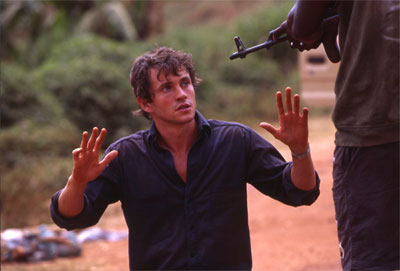
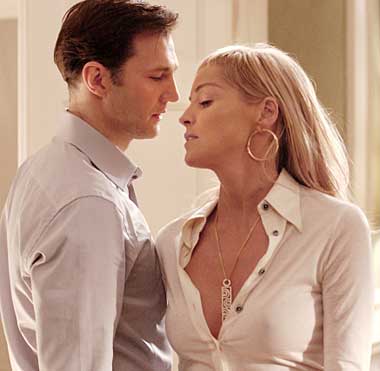 Oh yes. It's terrible in ways both profound and choice, folks: the first turkey since Killing Me Softly, or maybe Equilibrium, that I think I'm going to be actively recommending to everyone I know. There will be Basic Instinct 2 DVD parties round our flat in three months' time, you just know there will. I don't want to spoil too many treats, but the movie is deliriously, off-the-wall bad in ways that only crazy-tawdry production-line sequels to already dire films can be: self-parodic from the off, cretinously illogical, and kitted out with unimprovably absurd performances. I'm not entirely sure when it was that Sharon Stone turned into a scowling waxwork, but she's got the job for life, as far as I'm concerned; David Morrissey, as the hot-shot psychologist being lured into her web, ages about 12 years trying to smuggle out his dialogue, and the gallery of supporting “characters” makes the average Mel Brooks film look like peak-period Eric Rohmer. It’s the kind of movie in which Charlotte Rampling, playing a lesbian shrink called Milena Gardosh, is unable to answer a crucial phone call because she’s plugged into a Hungarian-for-Beginners tape — swotting up on that family background, perhaps? — and indeed the kind of film in which every single character has a “past record” instead of, you know, a past. Pauses between lines are pregnant with embarrassment, mainly because we know another line’s coming, and it might just be even worse. (“Too many questions, too many answers, no one gets laid” — Stone’s problem with psychiatry, in a nutshell.) The Gherkin, becoming the de rigueur London landmark for filmmakers who have no idea what the hell they’re doing here (see also: Match Point, V for Vendetta) thrusts upwards into the City skyline and gets, about fifteen times, the biggest giggle for a phallic symbol since the climactic red lighthouse in In the Cut. “What happened?” asks Morrissey, entering the bedroom of a sleazy journo (“Urbane Magazine”) who’s been throttled by a bondage strap. Er, he slipped? And so on, and so on. I’m giving it its own grade twice, because it’s golden turkey, fortissimo terrible, and it shouldn’t be missed. FF
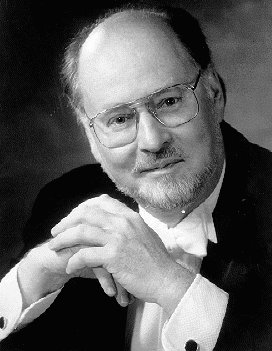 OK, this is an admittedly perverse inaugural choice for a series about the undersung. Williams, Mr 45 Oscar nominations and counting, is not exactly wasting away in his need for mainstream validation, in a field where as ripely innovative a talent as Alexandre Desplat (Birth, The Beat That My Heart Skipped, Syriana) has yet to score his first nod. But I’m starting as I mean to go on, in another sense, because I want to make the point that Williams is both over- and under-rated, to fend off the perpetual backlash, and give him his due. The Academy might lap up his stodgiest work on the stodgiest movies (The Patriot, Amistad, you know the drill) with a maddening lack of discrimination, but Williams-bashers — and there are plenty out there — are all too often guilty of the same misjudgement: quick to lump his scores together when they least deserve to be, and too slow, I think, to appreciate his quicksilver versatility and experimental verve on the right project.
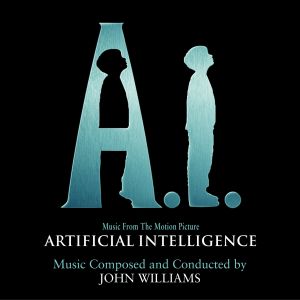 Five of the best:
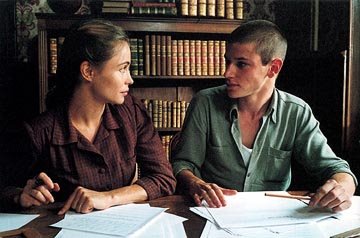 Two of this week's UK releases are real growers. I'm upgrading André Téchiné's lucid and moving Strayed to a B+ — I still think the final reel's flawed, but I'm going to be going back for another look — and John Turturro's Romance & Cigarettes to a B—, because it's a total mess with wonderful things in it, and I'm finding it hard to shake.